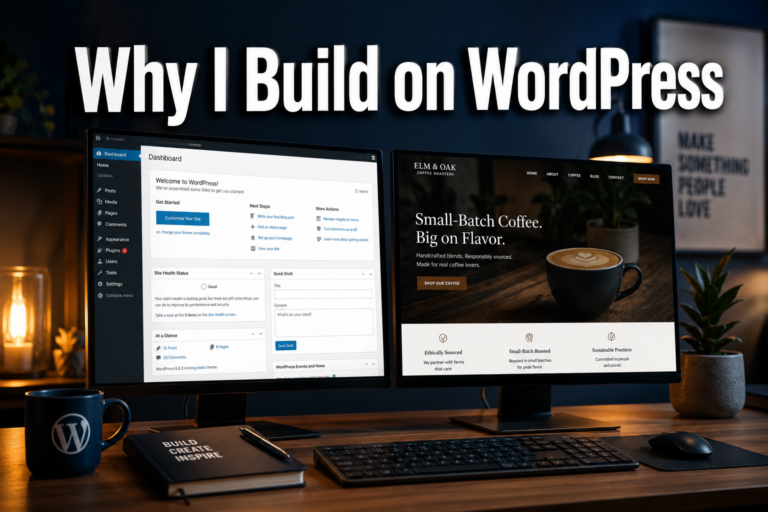
Over 60% of UK small businesses choose the wrong website platform, costing them thousands in lost revenue and months of frustration. When comparing WordPress vs Wix vs Squarespace for small business UK operations, the stakes couldn’t be higher. Your platform choice determines whether you’ll rank on Google, own your digital assets, or find yourself locked into expensive monthly fees with limited control.
As a Stockport-based web designer who’s built hundreds of sites for UK businesses, I’ve seen the real-world consequences of these decisions. Let me share what actually works for British small businesses in 2026.
Key Takeaways
• WordPress dominates with 43.7% of all websites globally, offering unmatched flexibility and SEO capabilities for serious businesses
• Wix suits beginners needing quick, simple sites but limits long-term growth and Google rankings
• Squarespace excels at design-focused businesses like photographers and creatives but lacks advanced functionality
• UK businesses benefit from WordPress’s superior local SEO tools, GDPR compliance options, and hosting flexibility
• Total cost of ownership often favours WordPress despite higher initial setup requirements
Table of Contents
- Platform Overview: The Big Three
- WordPress vs Wix vs Squarespace for Small Business UK: Core Comparison
- WordPress: The Professional’s Choice
- Wix: Quick and Simple
- Squarespace: Design-First Approach
- UK-Specific Considerations
- Cost Analysis: What You’ll Really Pay
- SEO and Google Rankings
- Which Platform Should You Choose?
- Making the Switch
- FAQ
- Conclusion
Platform Overview: The Big Three
When evaluating WordPress vs Wix vs Squarespace for small business UK ventures, understanding each platform’s core philosophy helps clarify the choice.
WordPress powers nearly half the internet because it’s built around you. It’s an open-source content management system offering unlimited customisation, thousands of plugins, and complete ownership of your digital assets. Think of it as buying your own property—you control everything.
Wix takes a made simple approach with drag-and-drop building and hosting included. It’s like renting a furnished flat—everything’s provided, but you can’t change the structure or take it with you.
Squarespace focuses on thoughtfully designed templates for creative professionals. It’s the design-forward middle ground, offering beautiful layouts with moderate customisation options.
Last year, I helped a Manchester-based consultancy migrate from Wix to WordPress after they hit growth limitations. Their organic traffic increased 340% within six months—a smarter way to build long-term success.
WordPress vs Wix vs Squarespace for Small Business UK: Core Comparison
.cg-comparison-container { max-width: 100%; margin: 20px 0; font-family: Arial, sans-serif; border-radius: 8px; overflow: hidden; box-shadow: 0 4px 6px rgba(0,0,0,0.1); } .cg-comparison-table { width: 100%; border-collapse: collapse; background: white; } .cg-header { background: #2c3e50; color: white; font-weight: bold; text-align: center; padding: 12px 8px; } .cg-platform { background: #34495e; color: white; font-weight: bold; text-align: center; padding: 10px 8px; } .cg-cell { padding: 8px; border-bottom: 1px solid #ecf0f1; text-align: center; font-size: 14px; } .cg-excellent { background: #d5f4e6; color: #27ae60; } .cg-good { background: #fff3cd; color: #856404; } .cg-poor { background: #f8d7da; color: #721c24; } .cg-feature { background: #f8f9fa; font-weight: bold; text-align: left; padding: 10px; } @media (max-width: 768px) { .cg-cell, .cg-platform, .cg-feature { font-size: 12px; padding: 6px; } }| Feature | WordPress | Wix | Squarespace |
|---|---|---|---|
| Ease of Use | Moderate | Excellent | Good |
| SEO Power | Excellent | Limited | Good |
| Customisation | Unlimited | Limited | Moderate |
| UK Hosting Options | Full Choice | Wix Only | Squarespace Only |
| Data Ownership | Complete | Limited | Moderate |
| Long-term Cost | Low | High | Medium |
The comparison reveals clear and considered differences. WordPress excels where it matters most for growing businesses: SEO capability, customisation options, and long-term value. Wix wins on simplicity but sacrifices growth potential. Squarespace offers distinctive by design templates but limits technical flexibility.
WordPress: The Professional’s Choice
WordPress represents modern solutions for businesses serious about digital success. Here’s why it dominates the professional web development landscape:
Unmatched SEO Capabilities
WordPress’s SEO advantages stem from confidence in every detail. The platform generates clean, semantic code that Google loves. Popular plugins like Yoast SEO and RankMath provide granular control over meta descriptions, schema markup, and technical optimisation.
I recently optimised a Stockport accountancy firm’s WordPress site, implementing local SEO strategies that increased their “accountant near me” rankings from page 3 to position 2 within eight weeks. This elevated everyday visibility translates directly to new client enquiries.
Complete Ownership and Control
Unlike hosted platforms, WordPress gives you reliable and refined control over your digital assets. You own your content, choose your hosting provider, and maintain complete access to your website files. This ownership proves crucial when businesses need to migrate, integrate with third-party systems, or implement custom functionality.
Unlimited Scalability
WordPress grows with your business through its extensive plugin ecosystem. Need e-commerce? Install WooCommerce. Require booking systems? Choose from dozens of scheduling plugins. Want advanced analytics? Integrate Google Analytics 4 seamlessly.
Cost-Effectiveness
While WordPress requires initial investment in design and development, the long-term costs remain predictable and reasonable. You’re not locked into escalating monthly fees or platform-specific limitations.
Wix: Quick and Simple
Wix excels at getting businesses online quickly with minimal technical knowledge required. For certain UK small businesses, this made simple approach offers genuine value.
Drag-and-Drop Simplicity
Wix’s visual editor allows anyone to build a basic website within hours. The platform handles hosting, security updates, and technical maintenance automatically. For time-pressed business owners, this convenience factor shouldn’t be underestimated.
Built-in Features
Wix includes essential business tools like contact forms, image galleries, and basic e-commerce functionality. The App Market provides additional features, though options remain limited compared to WordPress’s ecosystem.
Limitations for Growth
However, Wix’s simplicity comes with significant constraints. SEO capabilities remain basic, customisation options are restricted, and you cannot export your site to another platform. Many businesses outgrow Wix within 12-18 months, requiring costly rebuilds on more flexible platforms.
Squarespace: Design-First Approach
Squarespace positions itself as the thoughtfully designed middle ground, offering beautiful templates with moderate customisation options.
Premium Design Templates
Squarespace templates genuinely impress with their visual sophistication. The platform attracts photographers, artists, and design-conscious businesses who prioritise aesthetics over functionality.
Integrated E-commerce
Squarespace’s e-commerce tools surpass Wix’s offerings, providing inventory management, abandoned cart recovery, and decent payment processing options. For small online retailers, these features offer genuine value.
Creative Limitations
Despite attractive templates, Squarespace restricts deep customisation. You cannot access underlying code, plugin options remain limited, and SEO capabilities, while better than Wix, fall short of WordPress standards.
UK-Specific Considerations
When evaluating WordPress vs Wix vs Squarespace for small business UK operations, several local factors influence the decision:
GDPR Compliance
WordPress offers complete control over data handling, cookie policies, and user consent mechanisms. Plugins like GDPR Cookie Consent provide comprehensive compliance tools.
Wix and Squarespace handle basic GDPR requirements but limit your control over data processing and storage locations—crucial considerations for UK businesses handling customer data.
Local SEO Requirements
UK businesses need robust local SEO capabilities to compete in geographic searches. WordPress excels here with plugins supporting local business schema, Google My Business integration, and location-specific content optimisation.
Hosting Location
WordPress allows you to choose UK-based hosting providers, improving site speed for British visitors and ensuring data stays within preferred jurisdictions.
Wix and Squarespace use their own global hosting networks, giving you no control over server locations—potentially impacting both performance and compliance.
Cost Analysis: What You’ll Really Pay
Understanding true costs requires looking beyond monthly subscription fees:
WordPress Total Cost
- Setup: £800-£3,000 (one-time professional development)
- Hosting: £5-£25/month (UK providers)
- Maintenance: £30-£100/month (optional managed services)
- Plugins: £0-£200/year (most are free)
Wix Total Cost
- Monthly Plans: £13-£39/month
- Apps: £5-£50/month additional
- No Exit Strategy: Rebuild costs £2,000+ when outgrown
Squarespace Total Cost
- Monthly Plans: £12-£35/month
- Transaction Fees: 3% on lower plans
- Limited Flexibility: Customisation requires developer workarounds
Over three years, WordPress often costs less while providing significantly more value and flexibility.